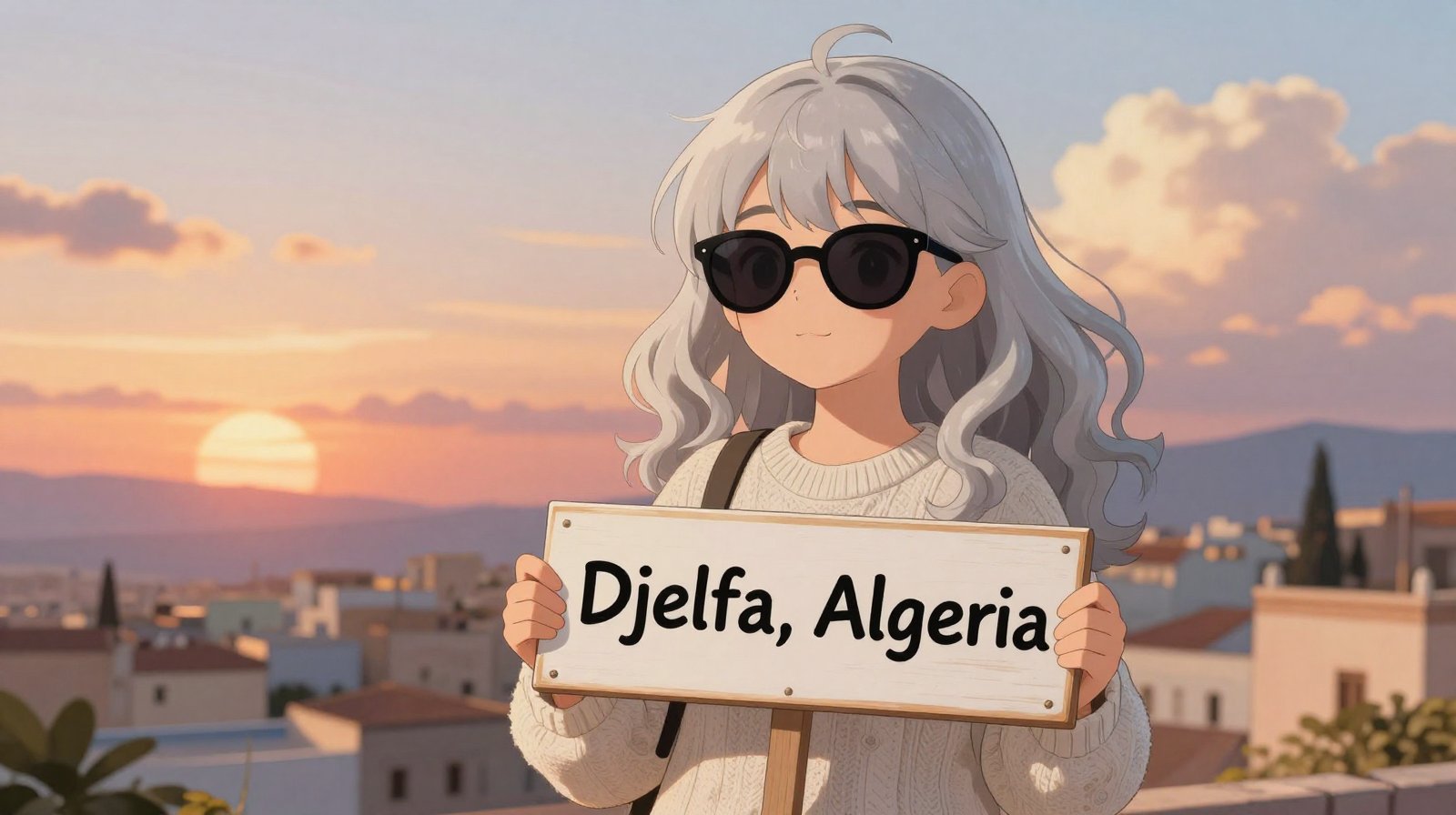
Djelfa
Algeria
Welcome to Djelfa! Where the Wind is Your Personal Tour Guide (and Sometimes a Little Pushy)
So, you've decided to ditch the coastal crowds and venture into Algeria's vast, beautiful high plateaus? Excellent choice! Welcome to Djelfa, the "City of Winds" – and trust me, the locals aren't kidding. Pack a sturdy hat, a sense of humour, and an appetite because Djelfa is about to charm your socks off, possibly with a helpful gust of wind. Forget what you think you know about Algerian interior cities; Djelfa marches (or gets blown) to its own fantastic beat. Let's dive in!
3 Fun Facts About Djelfa That'll Make You Sound Like a Pro
- The Windy City (Seriously): Forget Chicago! Djelfa's nickname, "Madīnat al-Riyāḥ" (City of Winds), is earned. The constant breeze isn't just weather; it's a local character. It cools you down in summer, helps dry laundry faster than any machine, and occasionally gives you a free, unexpected push up a hill. Embrace it! It’s nature’s air conditioning and personal trainer rolled into one.
- Roman Ruins? In the Middle of Nowhere? You Bet!: Just outside the city lie the fascinating ruins of Ain Touta. Think ancient Roman baths, temples, and settlements clinging to the landscape. It’s a surreal sight – Roman history whispering on the windswept plains, far from the usual Mediterranean coast. Proof that the Romans were everywhere, even if they needed a good scarf.
- Sheep Are Kind of a Big Deal: Djelfa is famous for its Annual Sheep Festival (Moussem des Moutons), usually held in spring. Imagine thousands of sheep, shepherds showing off their finest flocks, lively markets, traditional music, and enough sheep-related excitement to make you reconsider your vegetarianism (if only for a day). It’s a vibrant, woolly celebration of pastoral life you won’t find anywhere else.
Fuel Your Adventure: Local Food You MUST Try (Carb Lovers Rejoice!)
Forget diets; Djelfa demands culinary courage. The local food is hearty, delicious, and perfect for fuelling explorations.
- Couscous (The Real Deal): Not the tiny pellets you know! Djelfa’s couscous is often a grand affair, steamed fluffy grains topped with a rich, slow-cooked stew of lamb (or chicken), chickpeas, and seasonal vegetables like pumpkin and zucchini. It’s comfort food elevated to an art form. Prepare to loosen your belt.
- Chakhchoukha: A Djelfa specialty! Imagine torn pieces of flatbread (msemen or reghaif) soaked in a spicy, flavourful tomato-based sauce called "marqa," often containing lamb and chickpeas. It’s messy, incredibly satisfying, and a true taste of the region. Pro tip: Use bread to scoop – forks are for tourists here.
- Msemen & Mahjouba: For breakfast or a snack, grab these flaky, layered flatbreads. Msemen is square and slightly thicker, often drizzled with honey or butter. Mahjouba is thinner, folded into triangles, and perfect for dipping. Simple, yet utterly addictive. Pair with mint tea for the full experience.
Djelfa in a Dash: Your Perfect 24-Hour Itinerary
Got just one day? No problem! Hit these highlights for a whirlwind (pun intended) Djelfa experience:
- Morning (8:30 AM - 12:00 PM): Ain Touta Ruins & Windy Walks. Start early to beat the heat (and potentially stronger winds). Explore the Roman ruins, soak in the history, and feel the vastness of the plateau. The wind will be your constant companion – maybe bring a kite?
- Lunch (12:30 PM - 2:00 PM): Medina Munchies. Head into the heart of the old medina. Find a small, family-run restaurant (ask locals for recommendations!) and dive into a steaming plate of Chakhchoukha or a hearty Couscous. Observe daily life unfolding around you.
- Afternoon (2:30 PM - 5:00 PM): Sheep Market & Souk Stroll. If it's market day (usually weekly, ask around!), the sheep market is a must-see. Even if it's not the big festival, the energy is infectious. Then, wander the souks surrounding the medina – browse spices, fabrics, pottery, and maybe pick up a traditional burnous (cloak) to stylishly combat the wind.
- Sunset (5:30 PM onwards): Plateau Panorama. Drive or find a spot on the edge of town overlooking the vast plains. Watch the sunset paint the sky in incredible colours over the steppe landscape. It’s breathtakingly beautiful and the perfect, wind-swept end to your day. Grab some msemen and honey for a sunset picnic!
Expectation vs. Reality: The Djelfa Edition
- Expectation: A sleepy, dusty town lost in the desert, full of camels and sand dunes. Reality:** A surprisingly vibrant city on a windswept green plateau (yes, green!), bustling with markets, history, and more sheep than you can count. Camels? Rarely. Sheep? Absolutely everywhere.
- Expectation: Everyone speaks French, easy peasy. Reality:** While many understand French, Arabic (specifically Algerian Darija) is king. Don't panic! A smile, gestures, and a few key Arabic phrases ("Shukran" = Thank you, "Salam Alaikum" = Hello) go a long way. People are incredibly patient and helpful.
- Expectation: The food will be basic, maybe just grilled meat. Reality:** Prepare for flavour explosions! The stews are complex, the bread is fresh and divine, and the mint tea flows like water. It's carb-heavy heaven, not just meat on a stick.
- Expectation: It's going to be scorching hot, Sahara-style. Reality:** Thanks to that friendly wind and the altitude (around 1,100 meters!), Djelfa is often significantly cooler and more pleasant than coastal or desert cities, especially in summer. Pack layers!
The Local's Cheat Sheet: Djelfa Hacks
- Transport: Shared Taxis (Louages) are your best friends for short trips within town or to nearby villages. They're cheap and frequent. Agree on the price before getting in if it's not a fixed route. For longer distances (like to Ain Touta), hiring a private taxi for a few hours is often the easiest option.
- Etiquette: Dress Modestly, especially for women. Cover shoulders and knees. It's respectful and avoids unwanted attention. Greet Everyone: A loud "Salam Alaikum!" when entering shops or passing people is expected and appreciated. Right Hand Only: Use your right hand for eating, greeting, and passing things. The left is... well, not for public use.
- Hidden Gems: The Weekly Market (Souk): Beyond the sheep market, find the main weekly souk day (often Thursday or Friday – ask locally!). It's a chaotic, colourful explosion of fresh produce, household goods, clothes, and people-watching gold. Local Bakeries: Forget fancy patisseries. Find the tiny bakery pumping out fresh msemen, khobz (round bread), and pastries. The smell alone is worth it. Plateau Sunset Spot: Ask a local for their favourite place to watch the sunset over the plains. They might point you somewhere less obvious than the main viewpoint, offering a more authentic experience.
- Wind Strategy: Seriously, secure your hat! A light scarf is useful not just for modesty but for shielding your face from dust kicked up by the wind. Embrace it; it keeps you cool!
Go Get Blown Away (Literally and Figuratively)!
Djelfa isn't just a stopover; it's a destination with a soul as vast as its plateau and a spirit as lively as its markets. It’s a place where history whispers on the wind, sheep are celebrities, and a simple plate of couscous feels like a celebration. So, pack your sense of adventure (and that hat!), embrace the breeze, chat with the friendly locals, and dive headfirst into the unique, wonderful, and slightly gusty world of Djelfa. You won't regret it – the memories (and the flavour of that chakhchoukha) will stick with you long after the wind has died down. Now go explore!