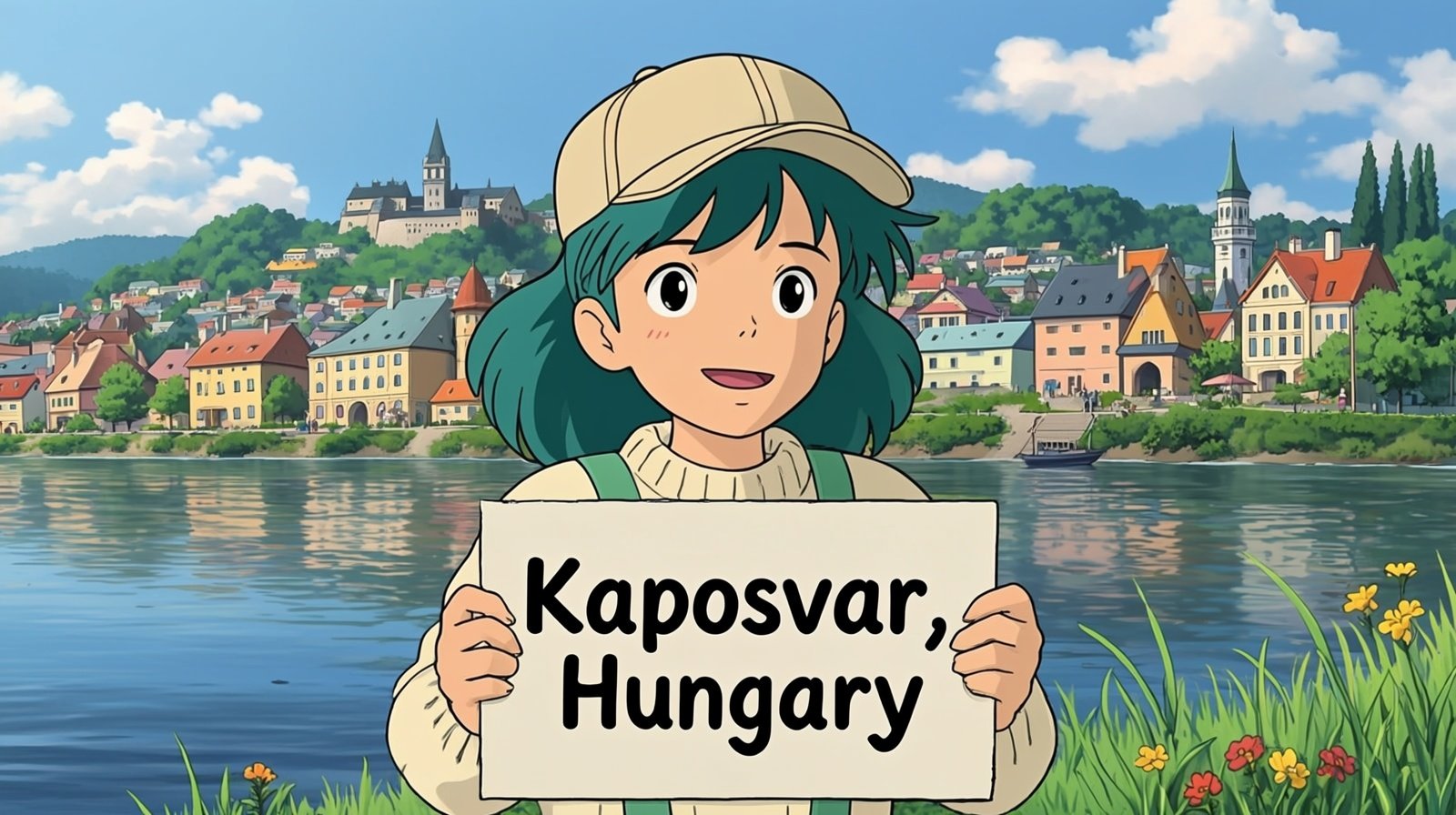
Kaposvar
Hungary
A Playful Welcome
So you've decided to visit Kaposvár, have you? Bless your heart. While everyone else is stampeding to Budapest's ruin bars or Lake Balaton's crowded beaches, you're here, reading about a city that Google Maps probably described as "a place in Hungary." Welcome, you magnificent, curious weirdo—you've just unlocked the secret level of Hungarian travel.
Let me be honest: Kaposvár won't seduce you with grandiose castles or Instagram influencers. Instead, it'll win you over slowly, like that awkward first date who turns out to be hilarious and unexpectedly charming. By the end of your 24 hours here, you'll be the annoying person at parties saying, "Actually, Kaposvár is fascinating," while your friends roll their eyes and refresh their Balaton selfies.
Fun Facts About Kaposvár
-
It's the "City of Flowers," and they are NOT kidding. Seriously, the locals have a borderline obsessive relationship with flowers. They don't just plant them; they orchestrate them. There are flowers on buildings, hanging from lampposts, and probably woven into people's hair. The city even hosts an annual flower festival where things get competitive. I once saw an elderly woman lecture a municipal worker about petal density. It was both terrifying and inspiring.
-
József Rippl-Rónai basically put this place on the map. Hungary's famous "Nabi" painter wasn't just from here—he's everywhere. His villa is a museum, his art is plastered across town, and there's a distinct possibility he'll appear in your dreams after you've seen his 50th self-portrait. The man loved a good turtleneck and made painting moody women in domestic settings into an art form. Respect.
-
There's no castle in "Castle-on-the-Kapos." The name literally means "Kapos Castle," but here's the punchline: the castle vanished centuries ago. It's the municipal equivalent of calling yourself "Doctor" because you own a lab coat. Archaeologists found some walls once, but that's about it. The locals are totally cool with this existential naming crisis.
Local Food You Must Try
Goulash at Öreg Harang Csárda: Not the watery stuff your college roommate made from a packet. This is the real deal—rich, paprika-heavy, and served with bread you'll want to write poetry about. Order it with csipetke (little pinched dumplings) and prepare for a food coma of epic proportions.
Lángos from the Market: You haven't lived until you've eaten fried dough slathered in sour cream and cheese while standing in a parking lot. The Thursday market near Kossuth Square has a vendor who makes them fresh. It's basically Hungary's answer to "what if pizza gave up on life and decided to be amazing instead?"
Somogy County Wines: Everyone fawns over Tokaji, but Somogy's reds are the unsung heroes. Try a Kadarka or Kékfrankos at BrumBrum Borbár. The staff will beam at you like you've chosen correctly on a game show. Pro tip: bring cash, because their card machine "works tomorrow."
Kürtőskalács (Chimney Cake): Find the little wooden kiosk near the theatre. Yes, it's touristy. Yes, it's cinnamon-covered crispy dough magic. No, you don't need my permission—your arteries already hate you anyway.
24-Hour Itinerary: Kaposvár in a Day
9:00 AM – Coffee at Kávéház a Vitális utcában: Start where locals actually go, not where TripAdvisor thinks they go. This tiny café has two tables and an owner who remembers everyone's order since 1987. Order an eszpresszó and a pogácsa (savory scone). Don't ask for oat milk unless you want a tragicomic stare.
10:00 AM – Kossuth Square & the County Hall: Stroll the main square and try to count all the flower displays before going mad. The County Hall looks like a wedding cake designed by someone who really loved symmetry. Take photos; you've got maybe 30 minutes before the flower-counting obsession begins.
11:30 AM – Rippl-Rónai Museum: Spend an hour with Kaposvár's favorite son. The permanent collection is gripping if you like moody early 20th-century domestic scenes. Even if you don't, the building's heating system is a marvel of 19th-century engineering (I got very cold and became interested in radiators).
1:00 PM – Lunch at Malom étterem: Traditional Hungarian food in a converted mill. Order the pörkölt (stew) and pretend you know the difference between it and goulash. You don't, and that's okay. The waiter will respect your effort.
3:00 PM – Rippl-Rónai Villa: Walk to the artist's actual home. It's charming, has a garden, and you'll learn about his cat. I'm not kidding—there's a whole section about his cat. Museums in small towns are gloriously specific.
5:00 PM – Csiky Gergely Theatre: Even if you can't see a show, the building's exterior is worth the walk. It's one of Hungary's oldest theatres and looks like a mini-Versailles that got lost on the way to Paris. Take a selfie; nobody you know will recognize it, making you seem sophisticated.
7:00 PM – Dinner & Drinks: Start at Sétáló Pinotel for dinner (reservations = myth here, just show up). Then crawl to Club 54 if you're under 30 or Bella Italia if you're over 30 and want wine that doesn't come in a plastic bottle. Meet a local named Attila. Everyone's named Attila.
Expectation vs. Reality
Expectation: A sleepy agricultural town where the most exciting event is the weekly cattle market. You'll be the only tourist and communicate through elaborate charades. Your phone's translation app will become your best friend.
Reality: A surprisingly lively cultural hub where people under 25 speak better English than you do and side-eye your pronunciation of köszönöm. The main street has three craft beer bars, and you'll spend two hours arguing with a local historian about whether Rippl-Rónai's cat was named Mitzi or Mimi. (It's Mitzi. I was wrong. He was very disappointed in me.)
Bonus Reality Check: The "castle" is still missing, but nobody cares because the flower budget apparently exceeds most countries' defense spending.
The Local's Cheat Sheet
-
Transportation: Kaposvár is gloriously walkable. The bus system exists but operates on a schedule known only to shamans. Taxis are cheap but don't expect seatbelts—they're more of a suggestion.
-
Essential Phrases:
- Köszönöm (Kur-sur-nurm) = Thank you. Say it constantly.
- Egy pálinka, kérem = One pálinka, please. Your liver will hate you, but your new Hungarian friends will love you.
- Don't clink beer glasses. Old superstition from the 1848 revolution. People will visibly flinch.
-
Hidden Gems:
- The Thursday Market: Not the touristy one. The real one behind the stadium. Buy homemade kolbász (sausage) and lie to customs about it.
- Csiky Garden: Quiet park behind the theatre where locals walk their dogs and judge strangers. Perfect for people-watching.
- The "Sétáló" (Pedestrian Street) at 6 PM: When everyone does their evening séta (stroll). It's a moving social network. Walk slowly, look judgmental, and you'll fit right in.
-
Money Matters: Cash is king. Many places accept cards, but they'll sigh heavily while doing it. There are ATMs everywhere, but they dispense cash in quantities that make you feel like a drug dealer (10,000 Forint notes are normal).
-
Timing: Everything closes on Sunday. Not "some things"—everything. Plan accordingly or learn which petrol station sells the best sandwiches.
An Encouraging Conclusion
Look, Kaposvár isn't going to be the highlight of your European adventure. It's not going to replace Paris or Rome in your heart. But it will be the story you tell most often—the one about the flower-obsessed town with the missing castle, the painter's cat museum, and the lángos that changed your life.
It's a place where you can still be a traveler instead of a tourist, where you can have a conversation with a local that isn't about exchange rates, and where you'll leave feeling like you discovered something that wasn't carefully packaged for international consumption.
So go. Be confused by the bus schedule. Mispronounce köszönöm with gusto. Eat the mysterious sausage. And when someone asks why you went, just smile mysteriously and say, "The flowers, mostly. And the cat."
They'll have absolutely no idea what you're talking about. And that's the point.